


A small number of Kent butchers are keeping the skills of whole-carcass butchery alive. At William’s Cliftonville shop, that means knowing the farmers, understanding the animal and being ready to answer whatever comes across the counter.
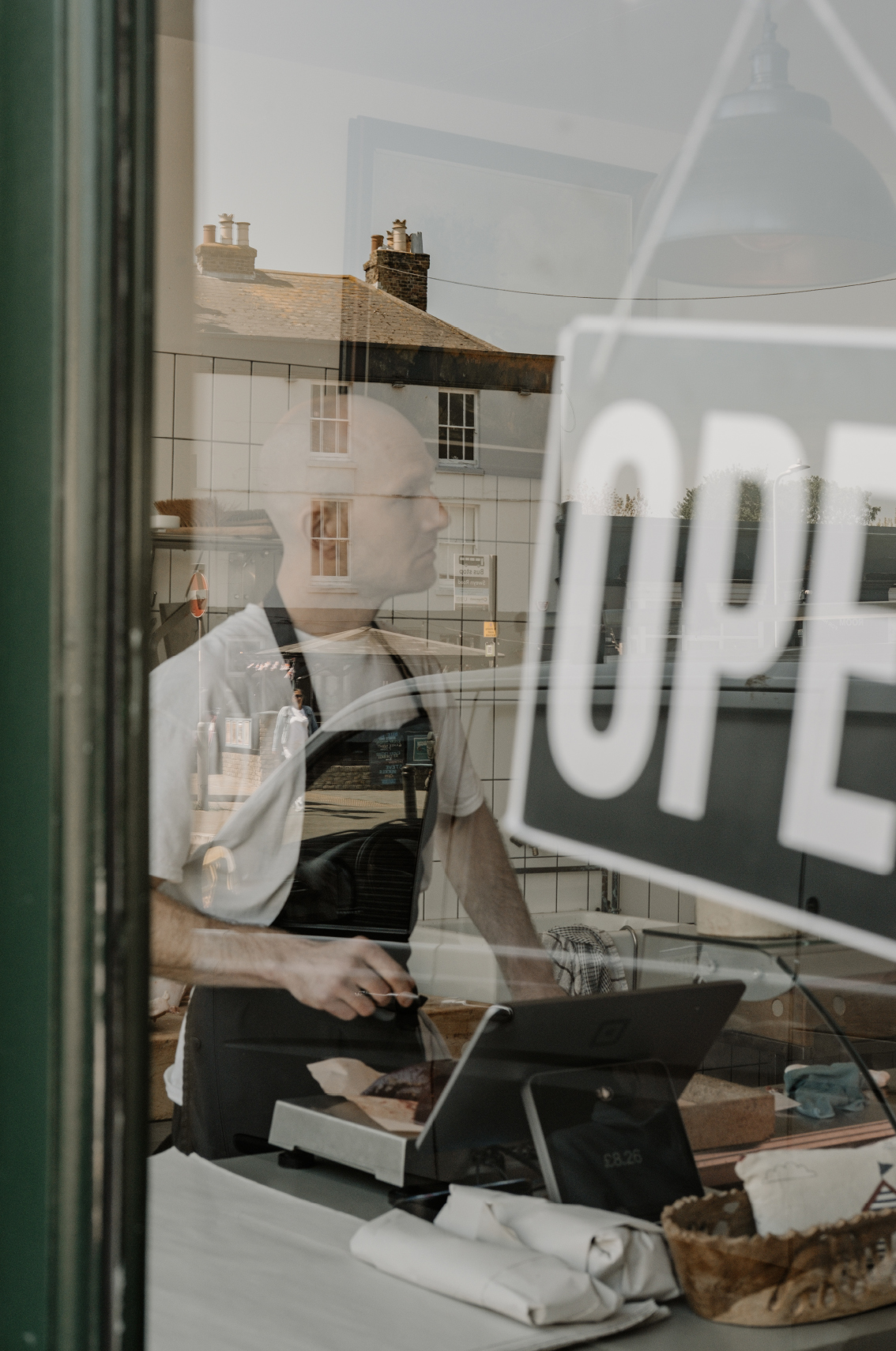
The metal fly chain hanging across the doorway announces each arrival with a brief jangle.
Beyond it, Northdown Road carries on.
Cars pull into spaces outside the large shop window. People call greetings across the street. A vintage motorcycle makes considerably more noise than seems necessary as it passes through Cliftonville.
Inside, things are quieter.
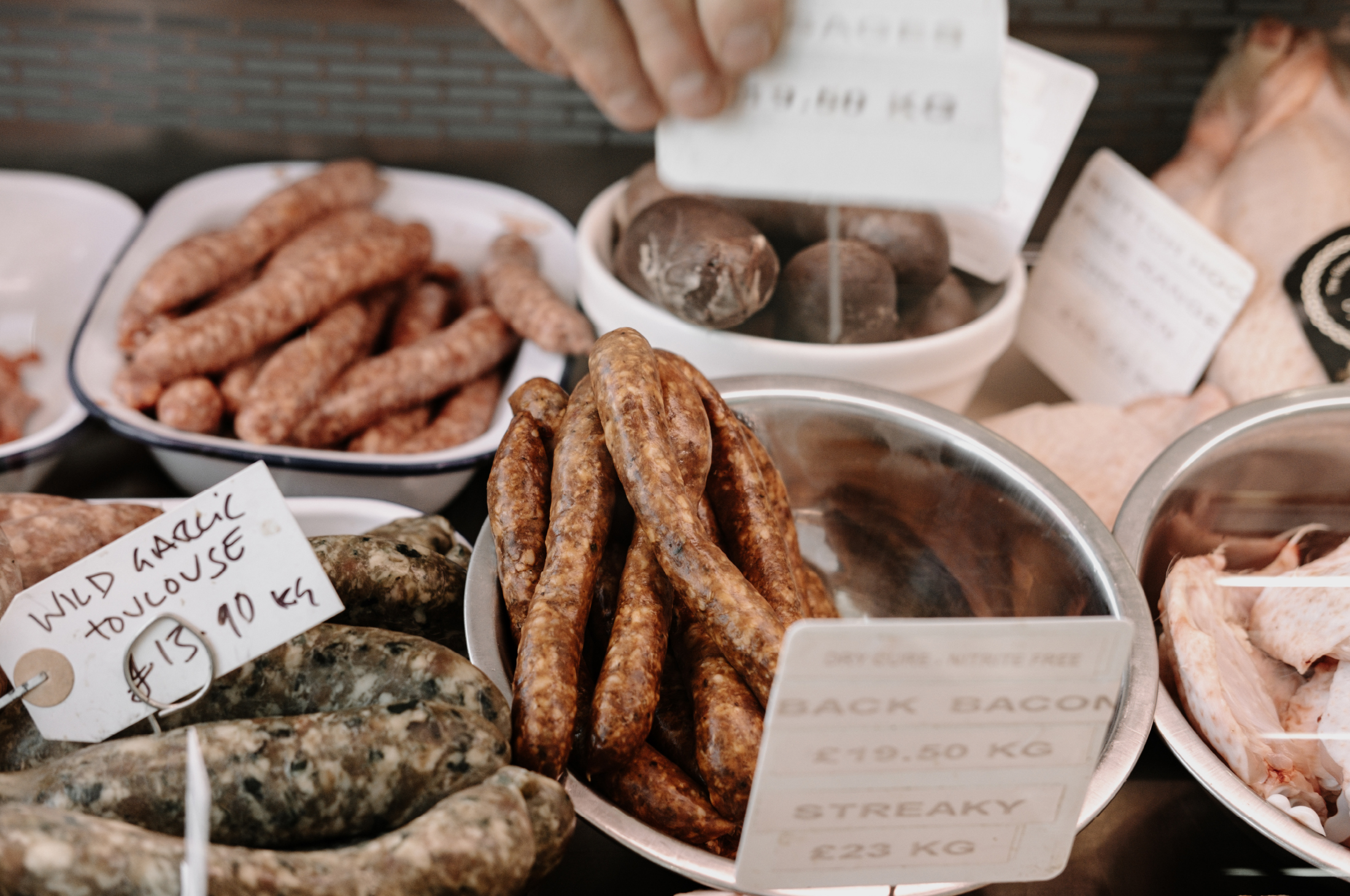
A long refrigerated counter runs through the centre of the shop. Behind the glass, cuts of meat sit beneath small plastic signs, many of them handwritten, pushed directly into whatever happens to be available that day.
There will be more by the weekend.
The counter fills gradually as the week progresses. At the end of each day, everything is taken out again and returned to the walk-in fridge at the back of the shop.
William stands behind it in a black apron.
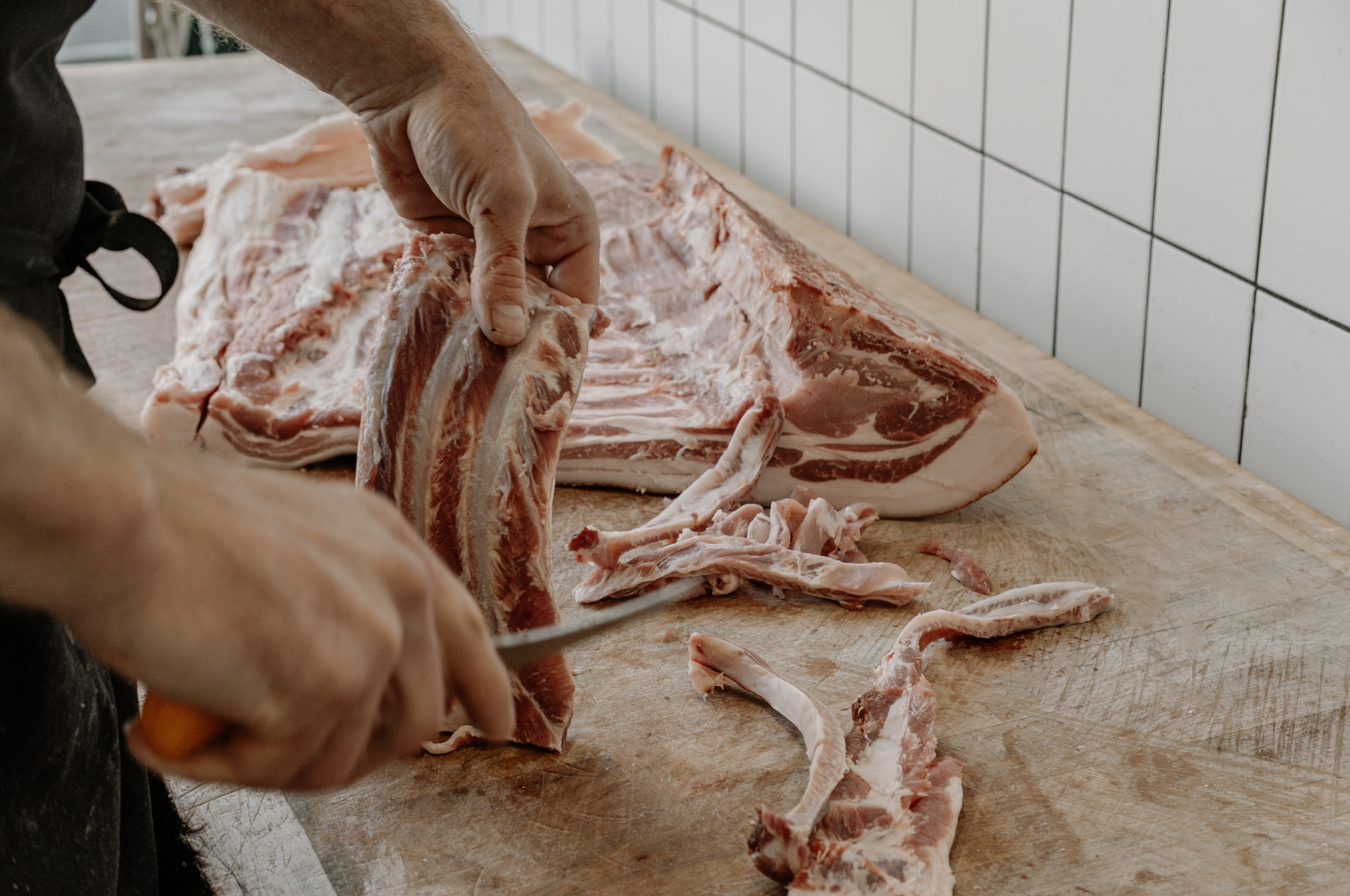
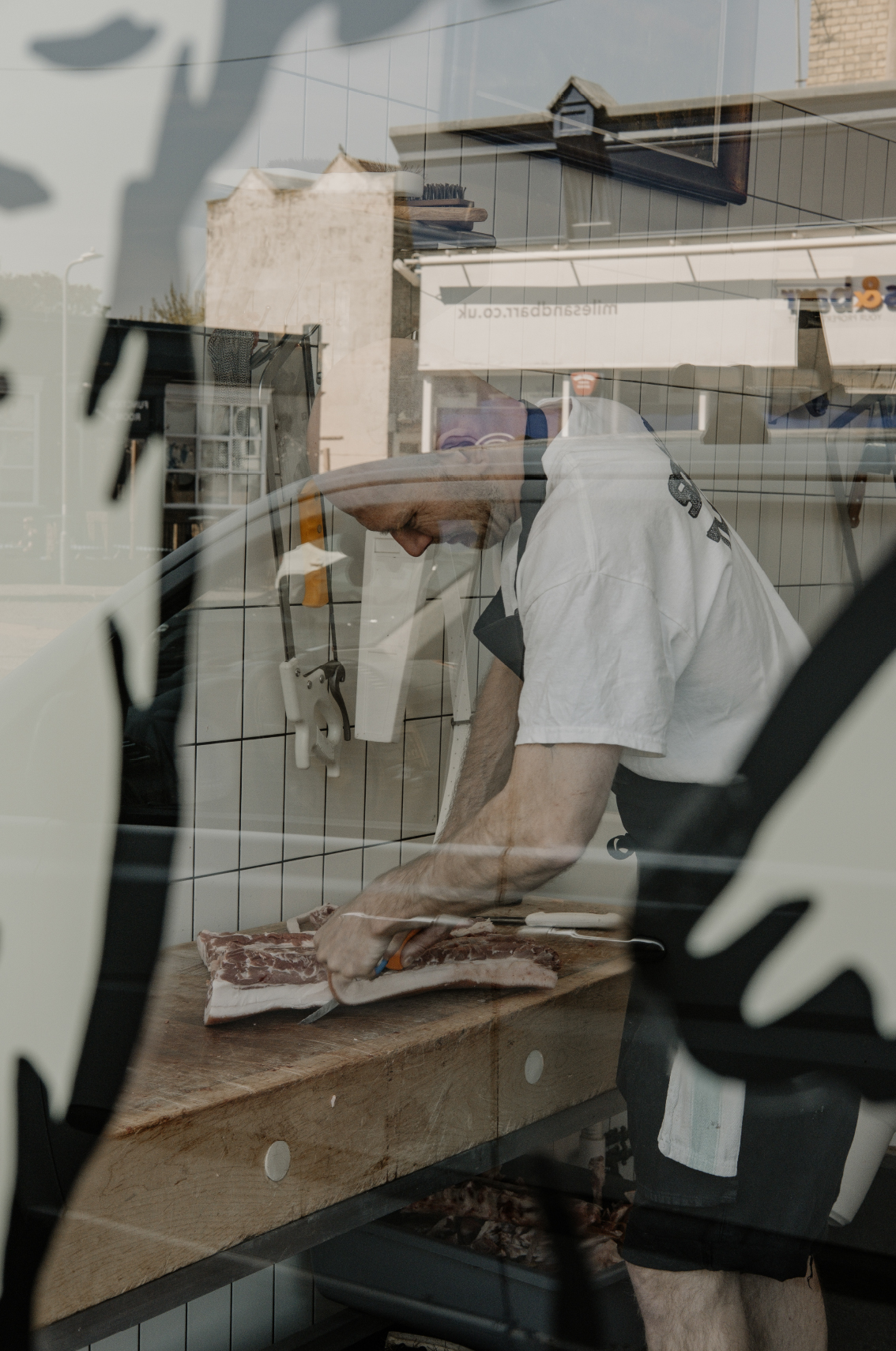
This is also where the butchery happens.
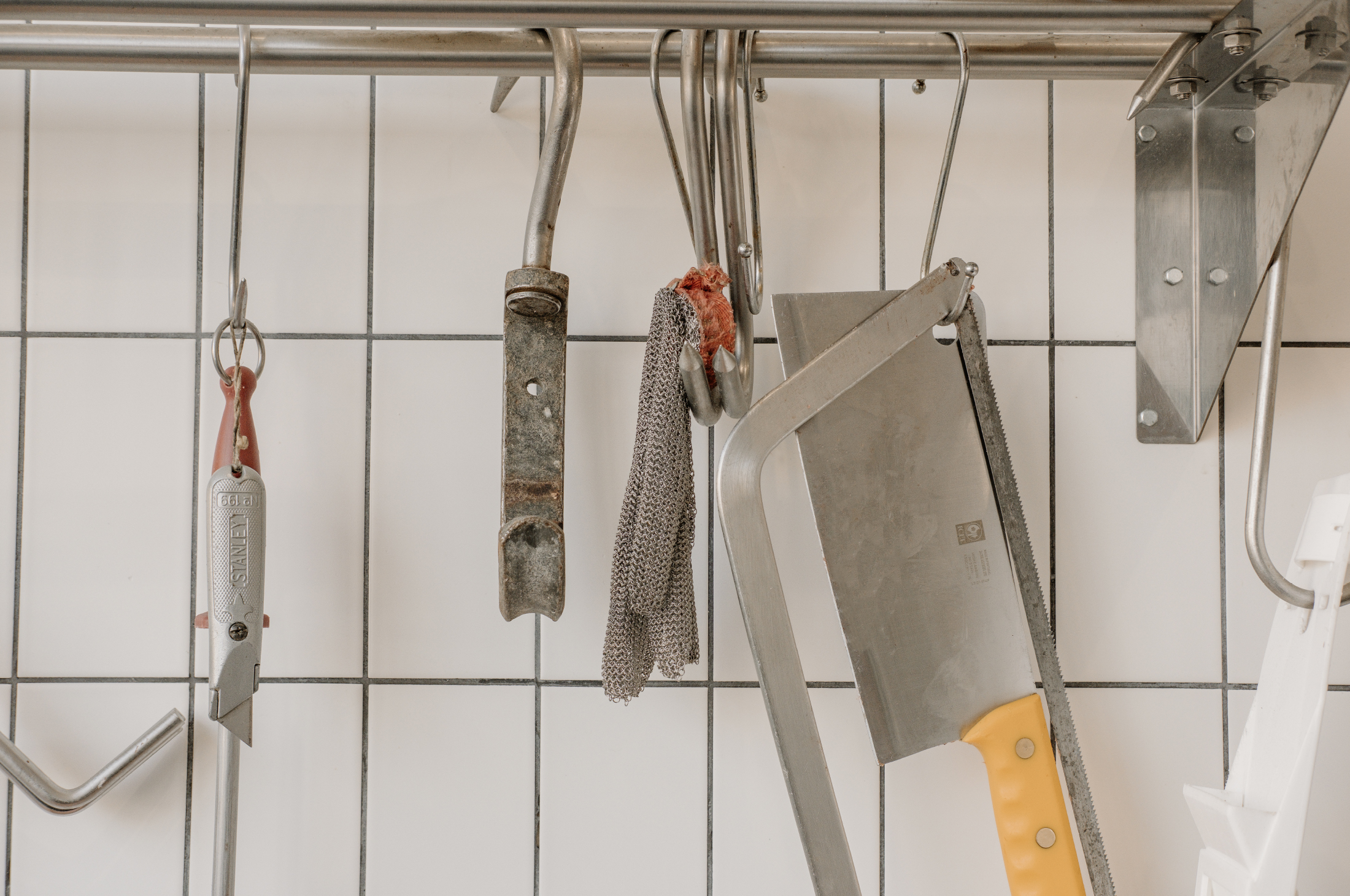
Two workstations sit against the back wall. Knives hang from a stainless-steel rail alongside a saw and cleaver, with metal hooks waiting to hold whatever William is working on next. Beneath them runs a substantial wooden butcher’s block, interrupted by a traditional Belfast sink and a pair of industrial-looking taps.
Above the tools hangs a framed picture that seems slightly at odds with everything beneath it.
When the shop is empty, William carries on working at the block.
The fly chain jangles.
He looks up.
For a moment, he waits. The customer may only be looking. If they need him, the work stops and William moves towards the sink to wash his hands before serving them.
If not, he carries on.
It is a rhythm that repeats throughout the day.
At the back of the shop is a white door with a large stainless-steel handle.
Most of the time, the small window beside it reveals very little.
Then the door opens.
A light comes on.
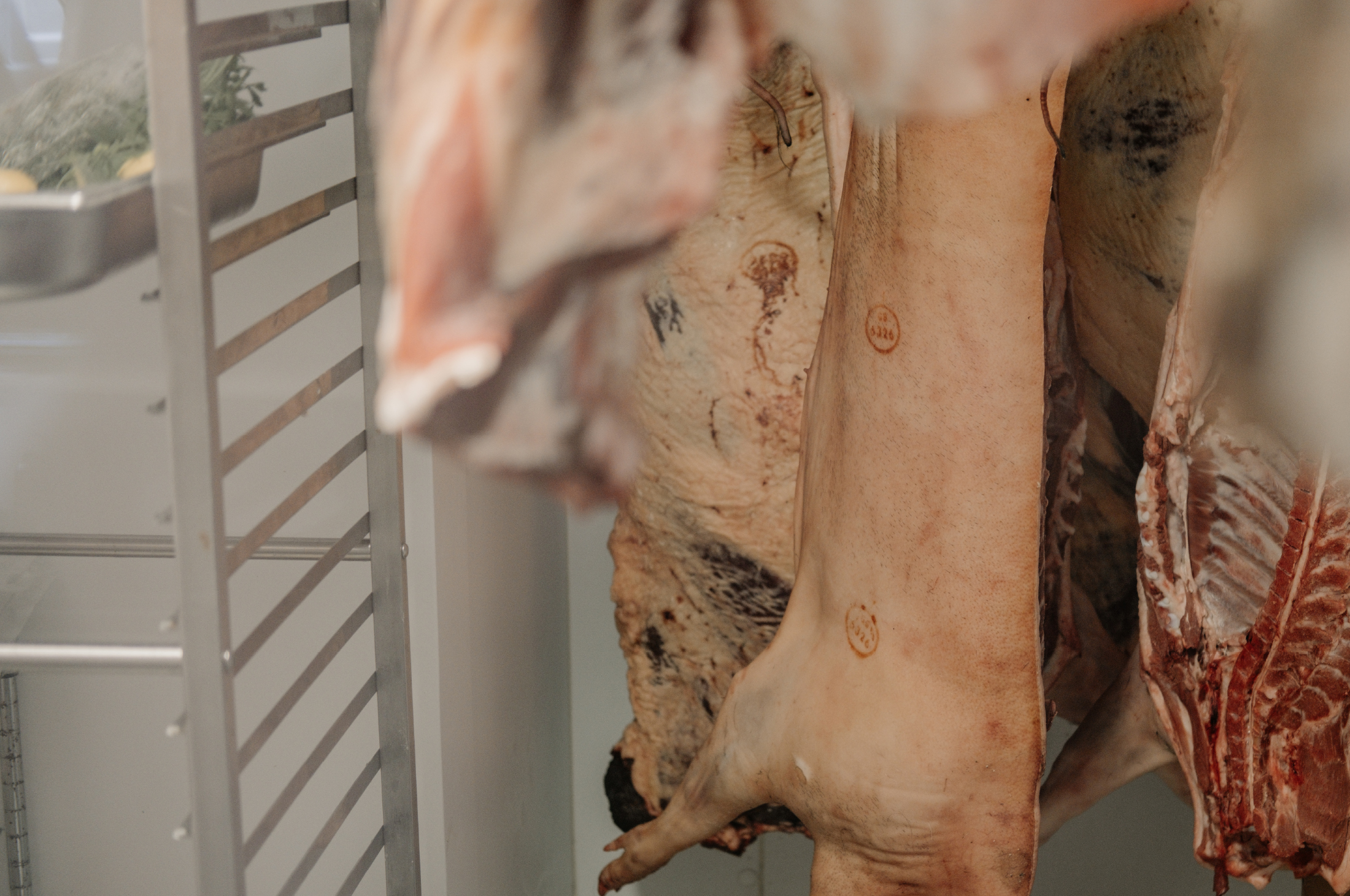
For a moment, the contents of the fridge appear.
Carcasses hang from metal hooks alongside smaller cuts waiting to make their way into the counter.
When William was setting up Northdown Butchers, another butcher suggested putting the cutting area at the back.
William decided against it.
He wanted customers to see what happened.
“If you’re a meat eater,” he says, “this is where your food comes from.”
William buys whole carcasses.
The beef, lamb and pork arrive not as pieces ordered according to demand, but as animals that must be broken down and eventually sold.
William talks about what happened as supermarkets grew and traditional butcher shops disappeared. Some that remained, he says, began operating more like the businesses they were competing against, buying prepared cuts rather than working from whole animals.
William went the other way.
Restaurants sometimes approach him wanting a particular steak on the menu.
Thirty ribeyes a week, perhaps.
He can’t supply them.
From the rib section of the animal, he might get around ten steaks.
A whole carcass cannot adjust itself to the requirements of a menu.
So the conversation has to work the other way around.
William talks about Bodega Caruso, a restaurant he has supplied since Northdown opened. Rather than ordering a predetermined quantity of a particular cut, they talk.
What have you got?
What could we use?
If William has something available, he might suggest they put it on the menu.
Something similar happens across the counter.
A customer may arrive looking for lamb shanks.
William may not have them.
What he does have might be another slow-cooking cut that will work just as well.
William isn’t someone who immediately fills the shop with conversation. He is more likely to wait for a customer to speak than launch into an explanation of what they should buy.
Once somebody asks, though, he is quick to help.
Buying meat from a supermarket requires very little conversation. The name is printed on the packet. There may be cooking instructions on the back. If you don’t know what something is, you can choose something you recognise.
A butcher’s counter occasionally requires you to admit that you don’t know.
What is that?
How much do I need?
How should I cook it?
Can I use something else?
For someone accustomed to buying meat wrapped in plastic, asking can feel surprisingly daunting.
Sometimes William persuades someone that the cut specified in a recipe isn’t the only one capable of producing the meal they want.
Sometimes he introduces them to something they have never cooked before.
The chain jangles and William looks up from the block.
Does the customer need him?
Or are they still deciding?
Every whole animal presents a question of its own.
Once you have taken the pieces everybody knows they want, what happens to everything else?
At Northdown, fat is rendered into beef dripping.
They make their own sausages.
Their own burgers.
Black pudding.
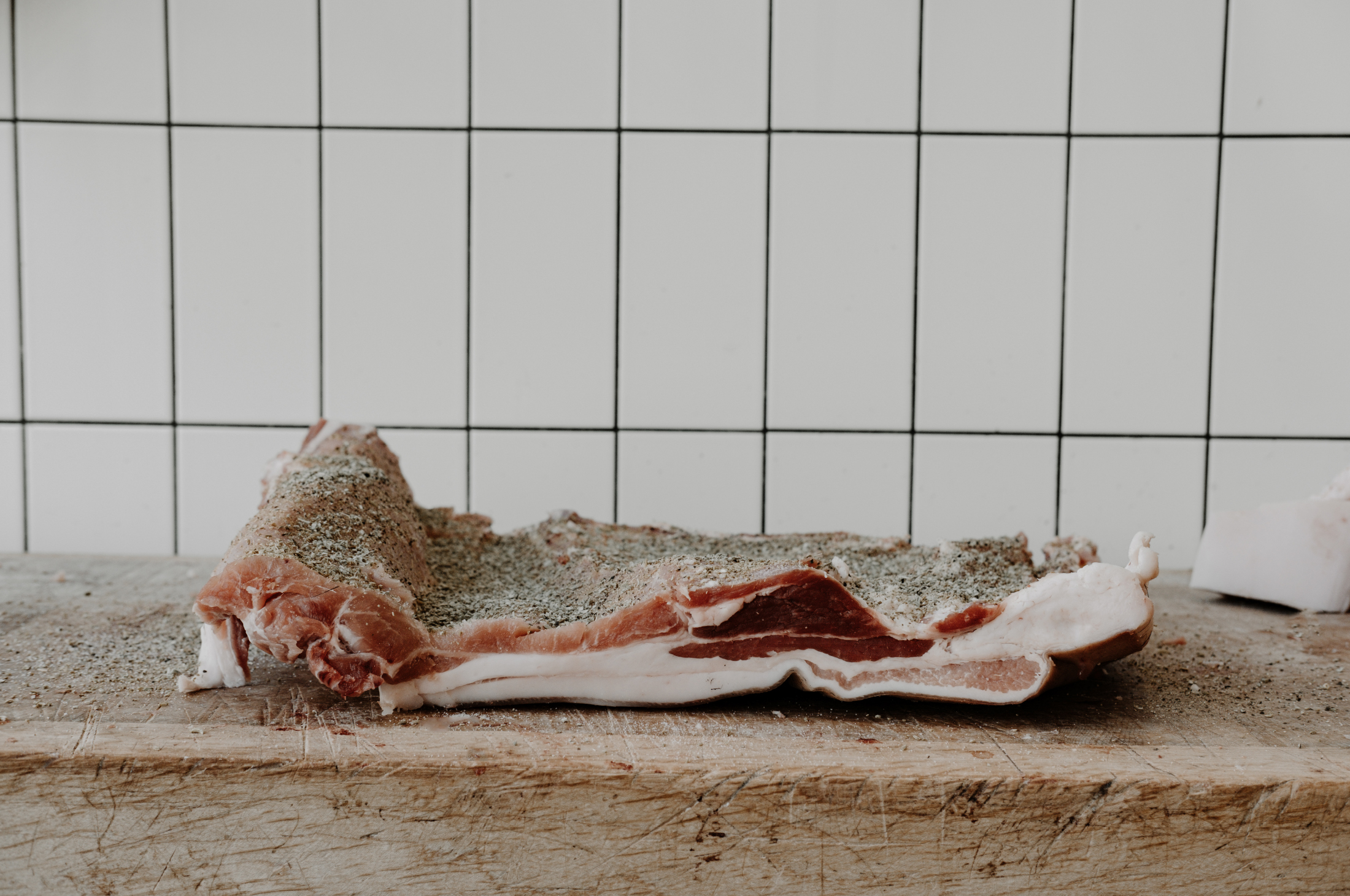
Bacon is cured in-house.
Heads arrive.
Tails.
Trotters.
Livers.
Kidneys.
Lungs.
There are customers for some. Other parts find their way into things William makes himself.
Standing behind the counter, William begins talking about bones.
The scale changes dramatically between a lamb and a cow, but the underlying structures are remarkably familiar.
Ribs.
Vertebrae.
Femur.
Humerus.
Once you understand where those structures are, the animal begins to make sense beneath the knife.
There are nuances. Different ways to approach different carcasses. Beef can be broken down into considerably more sections than lamb.
But you cannot learn all of it from a diagram.
“You definitely need someone to show you,” William says.
That is becoming more difficult.
He describes whole-carcass butchery as a dying trade. There are experienced butchers who have spent decades doing it, but fewer people coming through with the practical knowledge required to take an entire side of beef and know what to do next.
William once employed someone who had completed a college course in butchery. The training had covered areas such as hygiene, production and safety.
He had never butchered beef.
Behind William, the tools hang above the block.
Knives.
Saw.
Cleaver.
Hooks.
The work has its own rhythm.
Different animals arrive at different points in the week. Beef is broken down, then lamb and pork. Sausages are made. As the weekend approaches, attention shifts towards filling the counter and serving the people coming through the door.
The animals themselves have not travelled far.
William’s beef comes from a farm near Canterbury. The lamb comes from outside Sittingbourne and the pigs from near Faversham.
He knows the farmers.
He visits them.
He talks to them about how the animals are reared and what they are fed. He has worked with the same farms since Northdown opened.
Outside the window, Northdown Road is still busy.
The fly chain sounds again.
An older couple come in.
I speak briefly to the gentleman. He is immediately enthusiastic.
It is his wife’s favourite butcher, he tells me. The meat is excellent. She is already concentrating on the counter, talking with William about what they are buying.
Another customer is collecting an order for a restaurant.
Near the entrance, a cabinet contains cheeses from another independent business William has allowed to use some of his shop space.
People come and go.
In between them, William returns to the block.
He doesn’t pretend that butchery is glamorous.
What appeals to him is its honesty.
Around him, there is little to disguise the work.
The knives and saw hang above the block.
The meat in the counter changes according to what is available.
Behind the white door, whole carcasses hang in the fridge.
For a while, the shop is empty again.
William carries on working.
Then the fly chain jangles.
He glances towards the door.
Someone has come in.
William waits, watching to see whether he is needed.
Then he turns towards the sink.